The Critter Capital of the World: A Complete Guide to Diving Lembeh Strait
A 15-kilometre volcanic channel in North Sulawesi that defines muck diving — extraordinary biological density built on black sand, holding more rare and bizarre marine life than almost anywhere else on Earth.
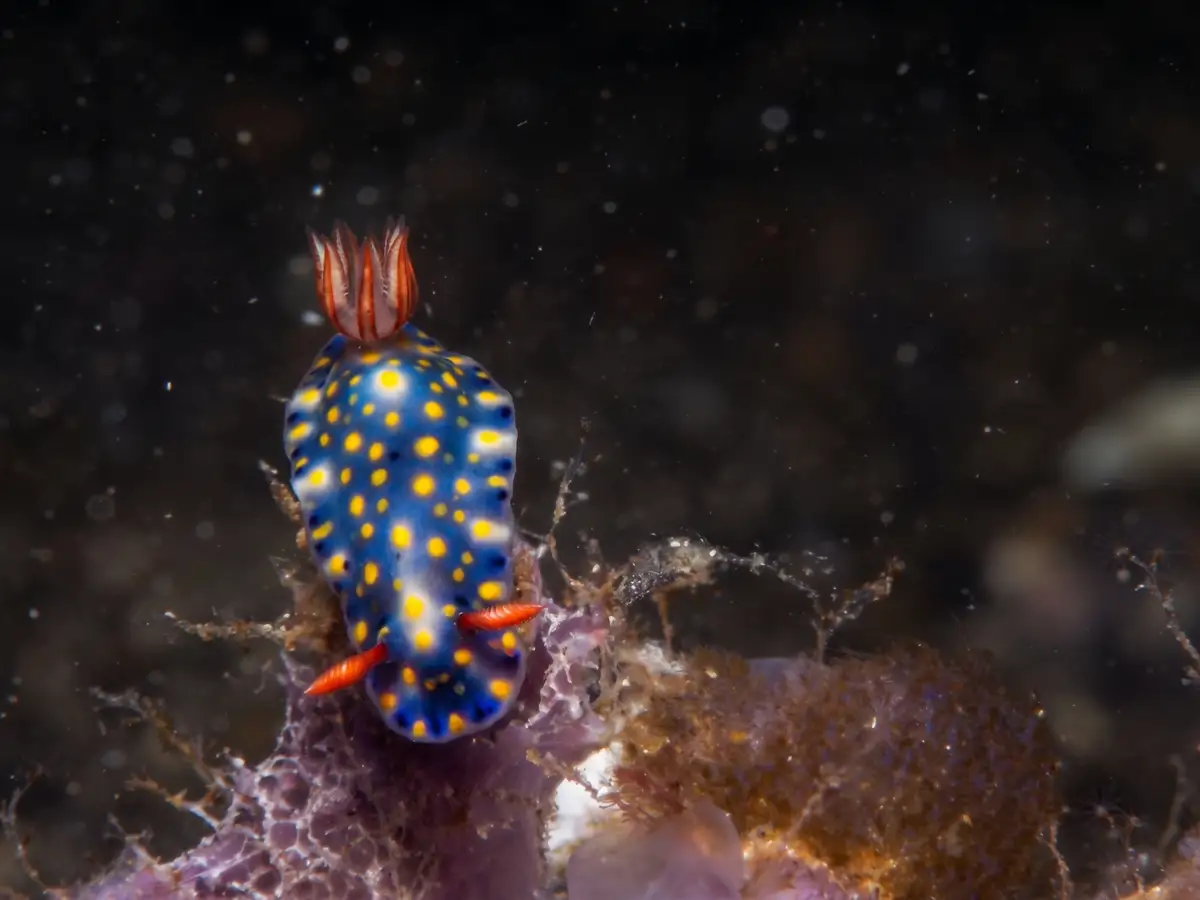
Lembeh Strait runs 15 kilometres between Lembeh Island and the mainland port of Bitung in North Sulawesi, sheltering a narrow channel from the Moluccas Sea and the Pacific beyond. Positioned within the Coral Triangle at the convergence of the Celebes and Moluccas Seas, the strait's V-shaped seafloor drops from shallow coastal banks to a central depth of 80 to 90 metres. The seabed is dark volcanic sand and silt — a byproduct of North Sulawesi's active geology — and the Indonesian Throughflow pushes cold, nutrient-rich water upward through the channel year-round. The result is not a reef. It is something stranger: an environment of extraordinary biological density, built on black sand rather than coral walls, and sustained by one of the most productive ocean currents in the world. Lembeh holds an estimated 1,100 species of marine life, including more than 350 nudibranch species, eight frogfish species, twelve octopus species, and several creatures endemic to these waters and found nowhere else on Earth. Diving here is slow-paced and close-focus — conducted metres above a dark seabed in patient search of the improbable. It is the destination that defined muck diving as a discipline, and remains its undisputed capital.
At a Glance
| Peak critter activity | July to September (cold upwellings, 25-26°C) |
| Warmer water | November to February (28-29°C, uncrowded) |
| Diving season | Year-round |
| Water temperature | 25°C - 29°C (varies by season) |
| Getting there | Fly to Manado (MDC); ~75 min overland to Bitung; ~15 min boat to Lembeh |
The Muck Sites
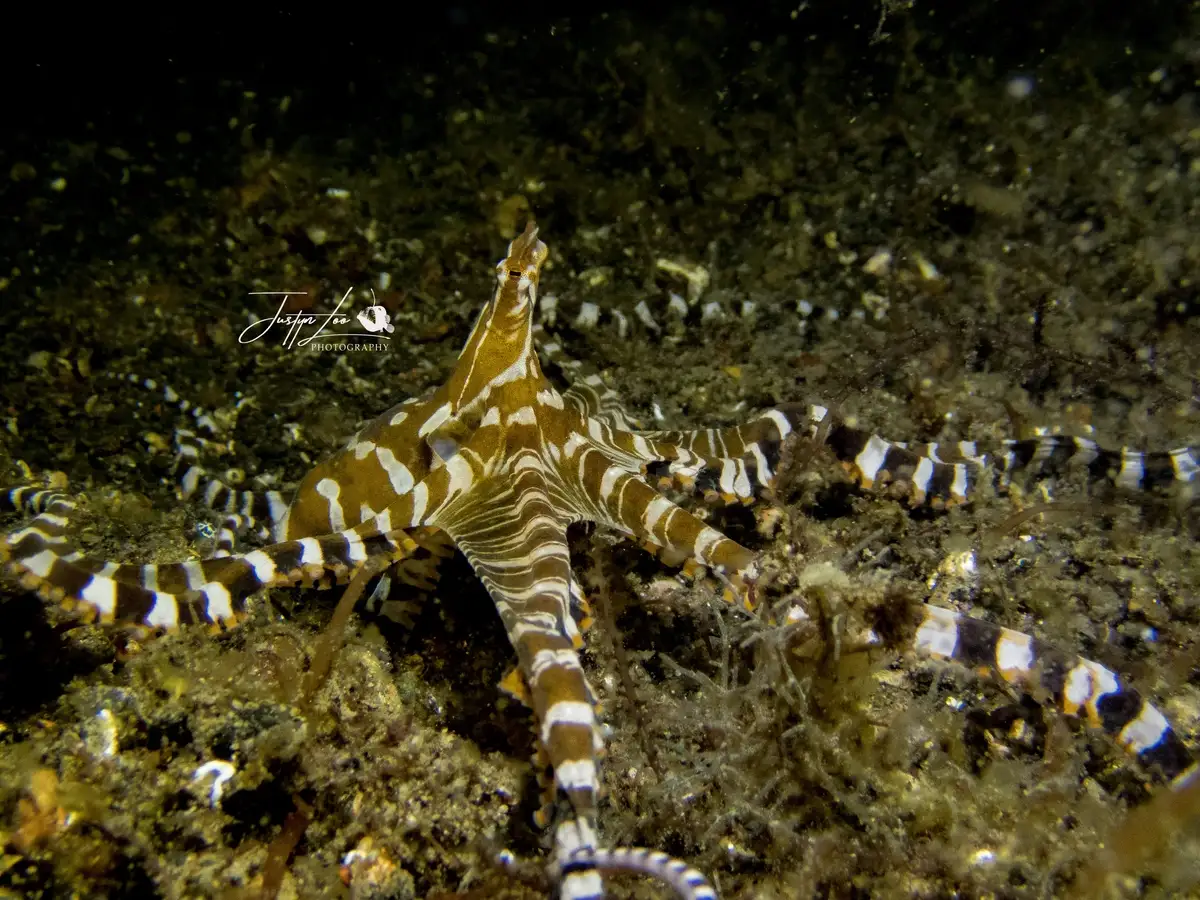
The sites immediately adjacent to Lembeh Island are the archetype: sloping black volcanic sand, dead coral rubble, scattered natural detritus, and an improbable quantity of things hiding in all of it. TK 1, 2, and 3 — Teluk Kembahu — occupy three adjacent bays along the island's coast and are widely considered the premier sites in the strait for cephalopod encounters. The sandy slopes here, studded with rope sponges, are the most reliable locations in Lembeh for the Mimic octopus and the Wunderpus — two species that attract dedicated trips on their own. Blue-ringed octopuses and flamboyant cuttlefish are routine sightings alongside them.
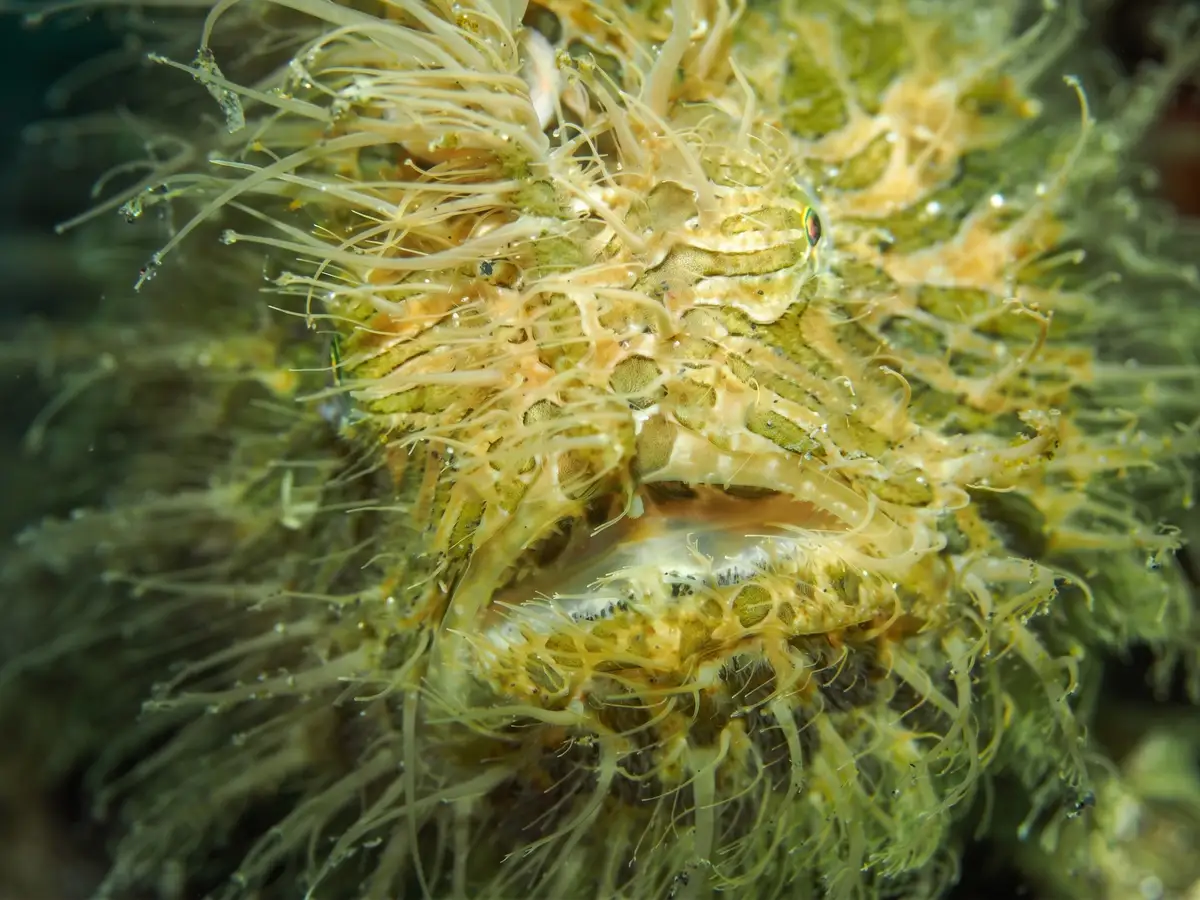
Hairball is a black sand plain purpose-built for the unhurried approach that muck diving rewards. Hairy frogfish, common seahorses, and mimic octopuses are the consistent draws. Divers who move slowly and spend time here tend to find considerably more than those who cross the site quickly.
Aer Bajo covers three distinct sites within one coastal area, each with its own character. Aer Bajo 1 begins over a shallow coral reef before transitioning to sand. Aer Bajo 2 is a gentle sandy slope descending to 22 metres. Aer Bajo 3 features one of the strait's few seagrass beds — a habitat that draws seahorses, pipefish, and hairy shrimp in numbers, alongside coconut octopuses in the adjacent sand. The variety of habitat types within a single dive makes it one of the more consistently productive sites in the strait.
Retak Larry, named after dive pioneer Larry Smith, is a quieter alternative for divers who prefer undisturbed conditions. A black sand slope to 30 metres with a small coral stand in the shallows, it reliably produces common seahorses, coconut octopus, broadclub cuttlefish, rough box crabs, and the unusual Melibe nudibranchs — animals that filter-feed with an open hood rather than grazing like most of their relatives.
Beyond the Black Sand
Several sites in the strait offer a different visual register while retaining the close-focus character that defines Lembeh.
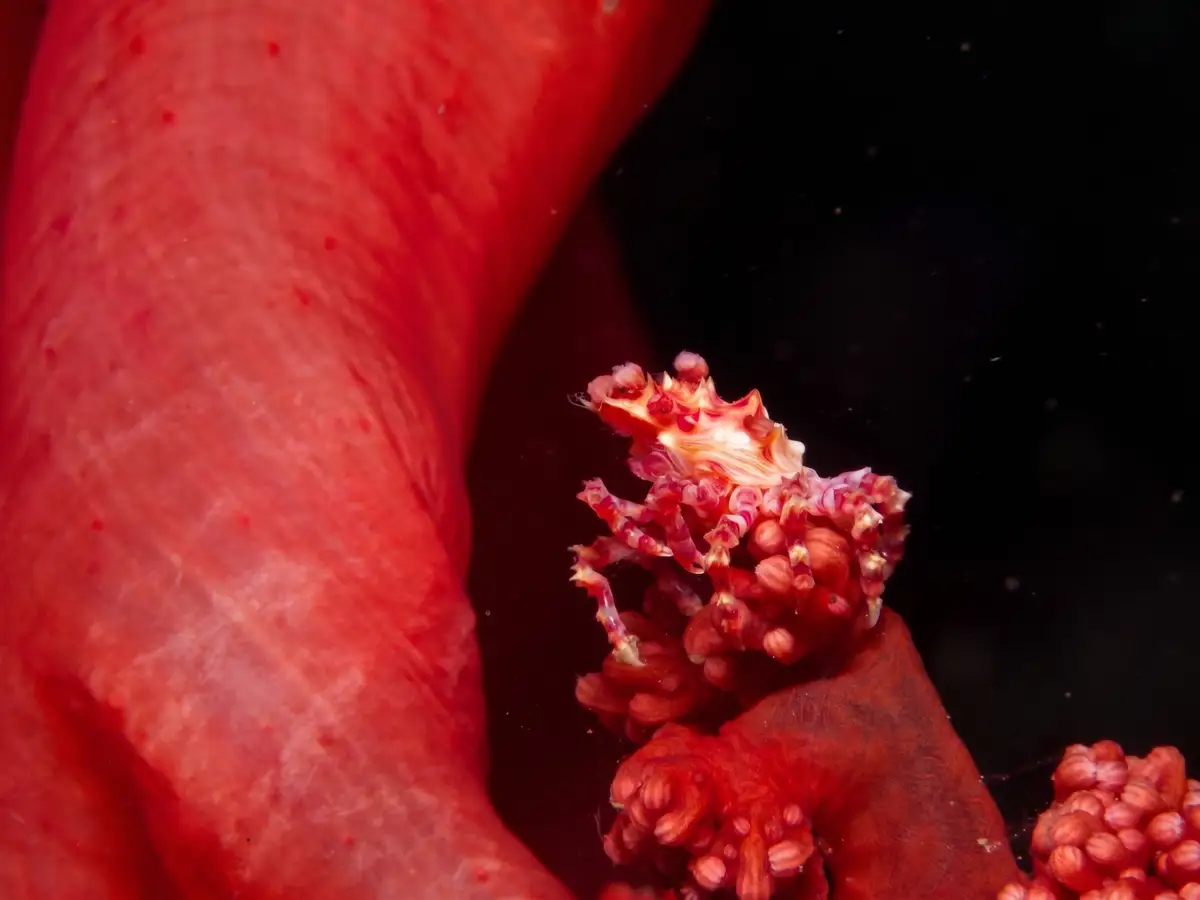
Nudi Falls begins on a mini-wall dropping to 16 to 20 metres before levelling into a rubble channel dense with large soft corals. The site takes its name from the nudibranch population on the wall, which is dense enough that individuals are occasionally dislodged by diver bubbles and drift downward in small cascades. Giant frogfish, candy crabs, and pinnate batfish are resident among the coral formations. The conditions are gentle and suit all experience levels.
Nudi Retreat transitions from coral gardens to soft sandy slopes alongside a small wall. Sea fans here host Bargibanti and Denise's pygmy seahorses, electric clams pulse in the crevices, and nudibranchs appear throughout. Devil rays pass through the blue water on occasion. The site covers enough variety within a single dive to serve as a strong introduction to what the strait offers.
Angel's Window is the strait's most distinctive topographic site: a twin-peaked coral pinnacle rising close to the surface, with one side dropping as a wall to 32 metres and a large natural swim-through cave that opens into open water. The sunlit archway of the cave provides a visual scale unavailable on the muck sites, while the sea fans on the wall hold Bargibanti pygmy seahorses and the shallower areas host Pontohi pygmies and twin-spot lionfish.
The Mawali Wreck
The Mawali Wreck provides a historically layered contrast to the sand slope sites. A Japanese World War II freighter now lying on its port side between 15 and 30 metres, the structure has been entirely colonised by the ocean — dense black coral trees cover the hull, and fish life crowds every section of the wreck. It is the strait's most compelling large-scale subject and a meaningful change of pace across a multi-day itinerary.
Walls and Reefs
At the northern tip of Lembeh Island, Dante's Wall drops sheer to 30 to 35 metres. A small opening near the base leads into a cave inhabited by lobsters, shrimp, and flashlight fish, while the wall itself is encrusted with black corals and sea fans hosting giant frogfish, pygmy seahorses, and nudibranchs. California Dreaming and Batu Kapal, slightly further north, shift the aesthetic entirely — expansive, vibrant soft coral reefs in clear open water that contrast sharply with the enclosed muck bays.
On the southern side of Lembeh Island, Pulau Dua and Jiko offer full reef dives: coral walls, dramatic drop-offs, and large schools of fish in conditions comparable to the reefs of Bunaken to the west. These sites are accessible from November to April, when conditions on the exposed southern side allow it. Serena Island, sitting in the middle of the strait, provides an intermediate option year-round — over 37% live coral cover with a reef and rubble mix that suits a wide range of divers.
What Lives Here
The Mimic octopus — an animal that actively impersonates other marine creatures including lionfish, flatfish, and sea snakes — was first documented in Lembeh's waters and remains most reliably encountered here. The Wunderpus, a close relative with distinctive white markings on a rust-brown body, is similarly associated with the strait. Among the frogfish, the hairy frogfish is the most commonly encountered of the eight species present; the painted frogfish and giant frogfish appear regularly. Rhinopias scorpionfish, flamboyant cuttlefish with their pulsing toxic colour displays, and mandarin fish performing their brief dusk mating rituals are among the other headline species.
The Lembeh Sea Dragon — an elongated, thread-like creature that mimics drifting seaweed and is endemic to these waters — is among the rarest sightings in the strait. Finding one is not guaranteed, but guides who know the specific sites where they occur give dedicated divers a genuine chance. Three species of pygmy seahorse inhabit the strait's sea fans and corals: Bargibanti, Denise's, and Pontohi, each occupying different structural niches within the same reef.
Topside: Tangkoko
The Tangkoko Nature Reserve on the North Sulawesi mainland is a half-day trip worth building into any stay of five days or more. Guided treks offer reliable sightings of crested black macaques — a Sulawesi endemic — alongside hornbills and, on nocturnal excursions, spectral tarsiers: small, enormous-eyed primates that serve as a reminder that Sulawesi's strangeness does not end at the waterline.
When to Visit
Lembeh can be dived every day of the year, and the right time to visit depends on what matters more to you.
The dry season runs from March to October, offering the calmest surface conditions and visibility of 15 to 20 metres. Within this window, July to September is peak critter season. The Indonesian Throughflow drives cold upwellings into the strait during these months, dropping water temperatures to 25-26°C. This cold pulse triggers a surge in biological activity: rare cephalopods and frogfish move into shallower water, nudibranch density increases, and unusual sightings become more frequent. Divers visiting specifically for maximum species variety will find this the most productive period.
The wet season, from November to February, is more rewarding than its name suggests. The strait's sheltered geography means dives are rarely cancelled by weather. Visibility drops to 5 to 10 metres in heavy rain, but this is largely irrelevant for muck diving, where most observations happen at a distance of 20 to 30 centimetres. Water temperature rises to a comfortable 28-29°C, dive sites are considerably less crowded, and nocturnal predators — including the Ambon scorpionfish — become conspicuously active in the warmer water. A wet-season trip to Lembeh is not a compromise; it is a different and equally legitimate version of the same destination.
Getting There
The gateway to Lembeh is Sam Ratulangi International Airport (MDC) in Manado, North Sulawesi's provincial capital. Manado is served by direct domestic flights from Jakarta and Bali, with connections available from most major Southeast Asian hubs. From the airport, the transfer involves a 60 to 90-minute overland drive to the port city of Bitung, followed by a 10 to 15-minute boat crossing to Lembeh Island. Most resorts arrange this as part of their packages.
Planning Your Trip
Dive resorts on and around Lembeh Island are built almost entirely around diving. Most operate on all-inclusive packages covering accommodation, diving, and transfers. A stay of five to seven days is the standard itinerary — long enough to cover the main site categories, experience both day and night diving, and allow for variation in the programme. For divers who want to combine Lembeh with the coral reef diving of Bunaken to the west, Manado serves as the connection point for both; the resorts we work with on Lembeh vary in their guide specialisations and site coverage, and some include Bunaken day trips as part of their programmes.