Into the Coral Triangle: The Complete Diver's Guide to the Derawan Archipelago
From sheer walls above a 4,000-metre abyss to a lake of stingless jellyfish and year-round manta rays — four extraordinary dive experiences within one archipelago.
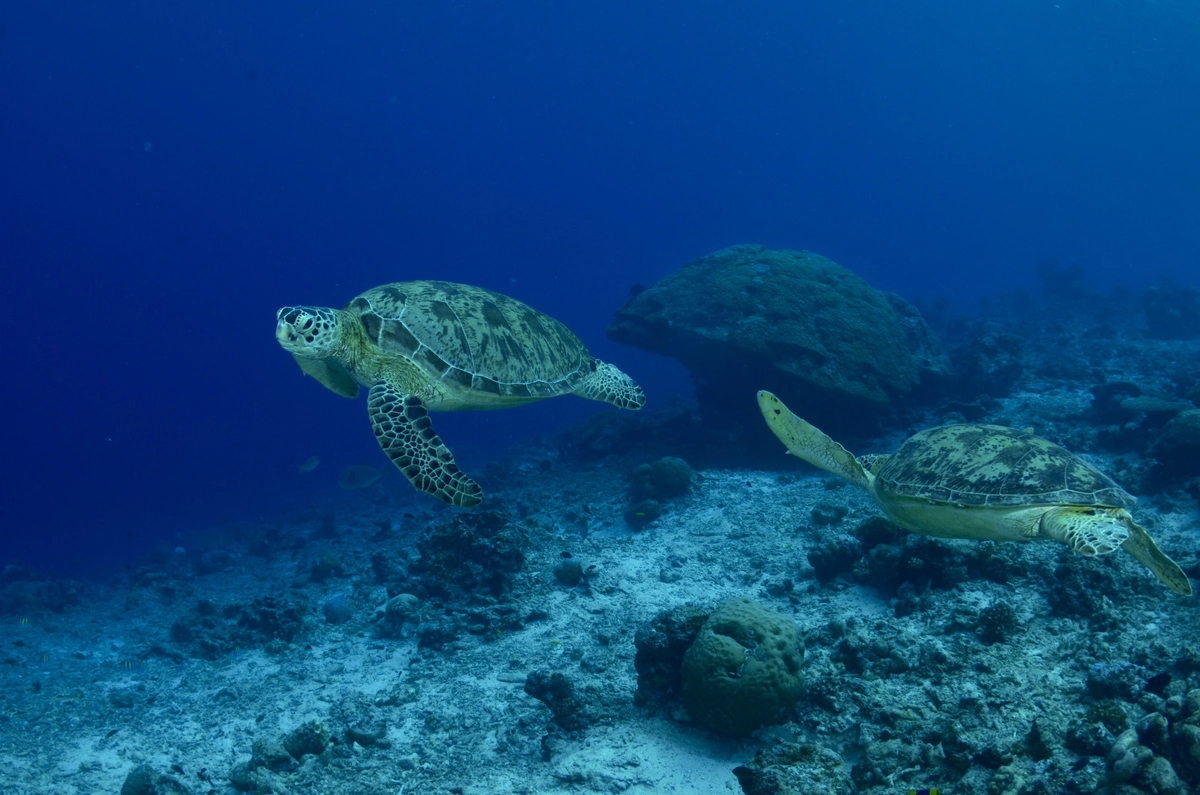
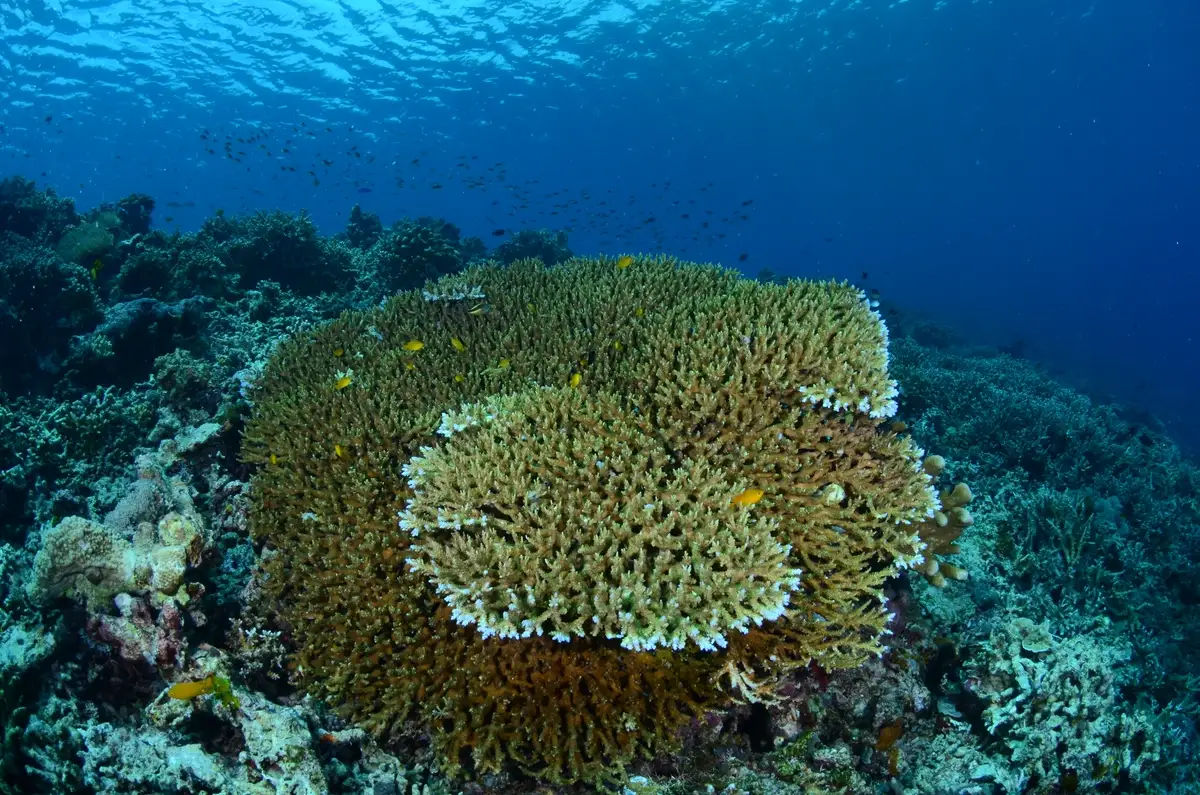
Off the eastern coast of East Kalimantan, on the Indonesian side of Borneo, the Derawan Archipelago sits at the heart of the Coral Triangle at the convergence of the Celebes and Java Seas. The islands are exposed to the Indonesian Throughflow oceanic current and deep-sea nutrient upwellings from the Makassar Strait — conditions that have produced a marine environment of exceptional richness. The archipelago holds the second-highest coral diversity in the world with over 460 species of hard and soft corals, supports more than 870 species of fish, hosts the largest green sea turtle nesting site in Southeast Asia, and contains a landlocked marine lake whose jellyfish population has evolved, in complete isolation from the ocean, to lose its sting entirely. Four destinations — Maratua, Kakaban, Sangalaki, and the whale shark grounds at Talisayan — each warrants the journey independently. Together they form one of the most complete dive itineraries in Southeast Asia.
At a Glance
| Best time to visit | March to October (peak June-August) |
| Manta rays | Year-round at Sangalaki |
| Turtle nesting peak | June to August |
| Water temperature | 27°C - 30°C year-round |
| Visibility | 20-30m dry season; 5-15m near mainland in wet season |
| Getting there | Fly via Jakarta or Bali to Berau (BEJ) or Tarakan (TRK) |
Maratua: Pelagic Walls on the Continental Shelf
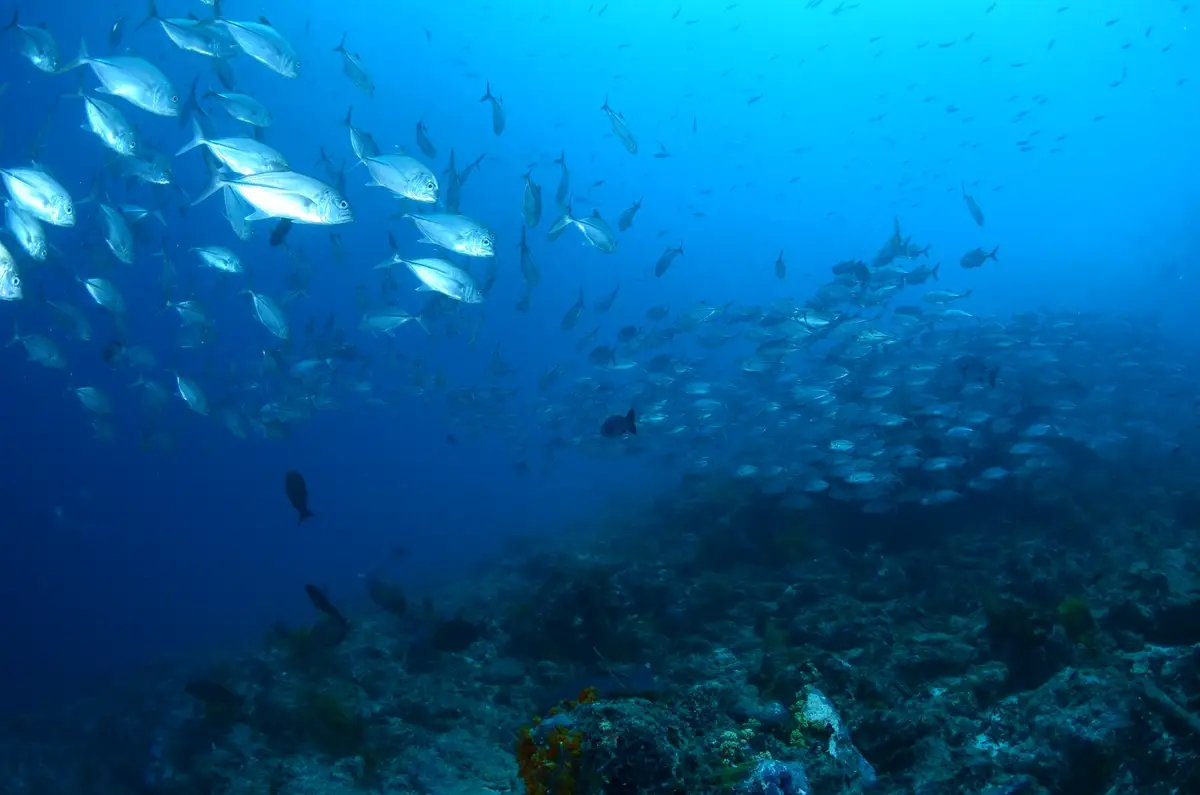
The geology of Maratua sets the terms for everything that happens underwater here. A horseshoe-shaped uplifted limestone atoll enclosing a large, shallow central lagoon, its outer edges sit at the rim of the continental shelf, where the seafloor drops away into the Celebes Basin — an abyssal ocean floor at over 4,000 metres depth. The sheer vertical walls of the outer atoll plunge more than 200 metres into that abyss, and deep-water channels cut through the limestone connecting the lagoon to the open ocean, funnelling tidal currents of considerable force. These currents carry deep-sea nutrients upward from the Makassar Strait and concentrate pelagic life in a way that few dive destinations can match.
The Channel, known locally as Big Fish Country, is the signature site. A high-current drift dive, it positions divers in the flow to watch chevron barracuda organise into slow, swirling columns overhead while grey reef sharks, thresher sharks, and eagle rays work the mid-water. The walls surrounding the channel are draped in massive gorgonian sea fans, black coral bushes, and pristine cabbage corals. East Wall, also called Eagle Ray Point, follows a sheer 70-metre drop-off with frequent eagle ray sightings along the wall face. For divers who prefer a calmer alternative, Turtle Traffic functions as an active cleaning station where green and hawksbill turtles surface and descend in a steady, unhurried rotation.
The Channel and East Wall are advanced dives — the currents are strong, the water movement unpredictable, and the depths significant. Divers should discuss site conditions with their guide before descending.
Kakaban: The Jellyfish Lake
Twenty minutes from Maratua by speedboat, Kakaban is an uninhabited, densely forested atoll whose geological history sets it apart from anything else in the region. Its interior holds a massive landlocked brackish marine lake, isolated from the ocean for long enough that its jellyfish population evolved away from any need to sting. Four species now inhabit the lake — Mastigias papua, Aurelia aurita, Tripedalia cystophora, and Cassiopea ornata — present in their millions and entirely safe to enter.
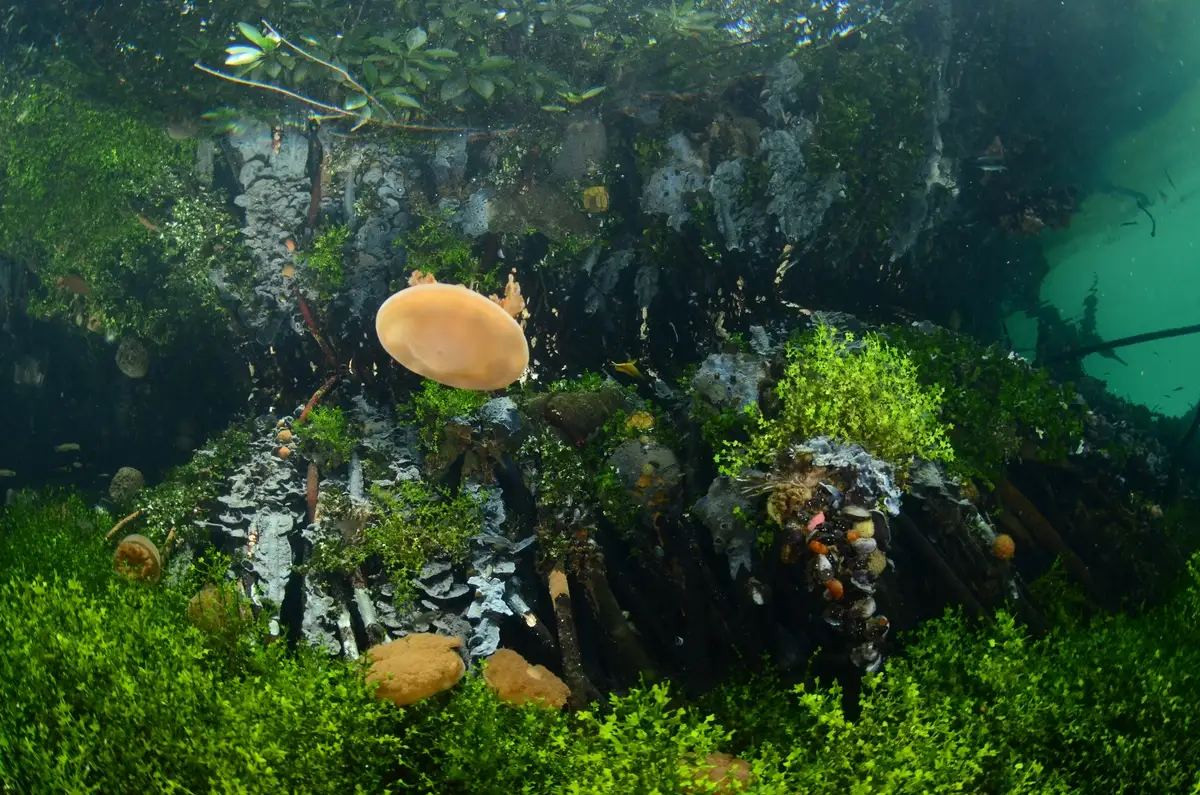
The lake is accessible by snorkelling only. Fins are prohibited to avoid disturbing the lake floor, and chemical sunscreens are banned to protect the jellyfish. These rules are enforced without exception.
On Kakaban's oceanic side, Barracuda Point is an intense outer wall drift dive swept by fierce upwellings and down-currents. Hammerhead sharks, whitetip reef sharks, leopard sharks, and large schools of chevron barracuda and big-eye trevally work the open water. This is a site for experienced divers comfortable with unpredictable, high-energy water movement.
Blue Light Cave — a cavern that enters at two metres and exits through a vertical slit at 44 metres — is one of the most visually striking dives in the archipelago. It is not part of standard resort dive programmes. The site requires dedicated overhead environment certification, independent backup air, and cavern navigation experience beyond what resort operations typically provide. Divers with the appropriate qualifications and their own equipment can arrange independent entry; it is not a site to attempt without them.
Sangalaki: Mantas, Turtles, and the Manta Highway
Sangalaki is a low-lying, uninhabited island surrounded by a shallow lagoon and over 500 species of hard and soft corals. Its two defining features — year-round aggregations of reef manta rays (Manta alfredi) and the most significant green sea turtle nesting ground in Southeast Asia — would make it worth visiting independently of everything else in the archipelago.
The manta activity is concentrated at three interconnected dive sites — Manta Avenue, Manta Parade, and Manta Run — which operators collectively call the Manta Highway. A series of ridges and shallow coral mounds function as dedicated cleaning stations and feeding grounds. The waters here are rich in plankton, and dozens of mantas regularly cruise near the surface with their mouths open to filter-feed. When not feeding, they hover over the coral heads while cleaner wrasse work their skin and gills.
The reliability of these encounters has been confirmed by science. A 2024 satellite telemetry study tracking reef manta ray movements in the Berau region found that tagged mantas exhibited highly localised behaviour focused almost entirely around Sangalaki — the only location they visited and revisited with consistency. Rather than following a migratory corridor through the wider archipelago, the manta population maintains a primary residency anchored to Sangalaki's reefs. For visiting divers, this means the manta population is present year-round rather than passing through seasonally — though no individual sighting can be guaranteed on any given dive.
Turtle Town provides a quieter complement to the manta sites: a shallow site where green sea turtles rest and, during nesting season, mate in the shallows. Macro life — cuttlefish, frogfish, and ribbon eels — inhabits the coral structures across the lagoon. The diving at Sangalaki is accessible to a wide range of experience levels; its shallow, clear conditions make it the most forgiving environment in the archipelago despite the calibre of wildlife present.
A conservation fee is charged on arrival. Turtle observation protocols require avoiding white lights and flash photography, particularly during hatchling releases.
Talisayan: Whale Sharks at Sunrise
Near the mainland coastal harbour of Talisayan, traditional floating fishing platforms known as bagans attract aggregations of whale sharks up to 12 metres in length, which surface to feed on baitfish discarded by local fishermen. Divers and snorkellers depart the islands at approximately 3:00 AM to reach the platforms by sunrise.
A strict code of conduct applies at the bagans: a minimum distance of three metres from the animals at all times, no touching, and no flash photography.
When to Visit
The dry season runs from March to October, with the peak window from June to August. Calm seas, minimal rainfall, and reduced river runoff push visibility to 20-30 metres across the outer atoll sites. June to August is also the peak period for green sea turtle nesting at Sangalaki. Water temperature stays between 27°C and 30°C year-round.
The wet season, from November to February, brings rougher seas, occasional storms, and visibility that drops to between 5 and 15 metres at sites near the mainland coast. Diving remains possible, and the outer atoll sites at Maratua and Sangalaki retain much of their character through the period.
Getting There
International arrivals connect through Jakarta or Bali, followed by a domestic flight to one of two entry points: Berau (BEJ) or Tarakan (TRK). A full day of domestic travel should be factored into any itinerary.
The Berau route involves a two-hour overland transfer from the airport to the port of Tanjung Batu, followed by a 45-minute speedboat crossing to the islands. The Tarakan route bypasses the overland leg but involves a direct three-hour open-water speedboat crossing — a more significant consideration in wet season sea conditions. Both routes are well-established, and the choice typically comes down to available flight connections.
Planning Your Trip
The majority of dive resorts serving this part of the archipelago are located on or around the Maratua atoll, making it the natural base for day trips to Kakaban, Sangalaki, and Talisayan. Most resorts can arrange the full itinerary — jellyfish lake, manta dives, turtle sites, and the pre-dawn Talisayan transfer — without requiring a change of accommodation; the resorts we work with in the archipelago vary in their day-trip range and how they handle the Talisayan departure, which is worth checking before booking.