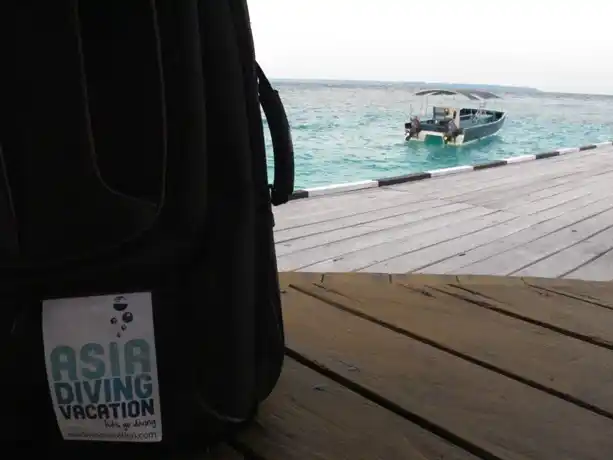
How to Take the Slowest Route to Maratua Island, Derawan
A planned same-day trip to Maratua turned into an unplanned overnight in Nunukan, and a lesson in why transit buffers matter on the way to the Derawan Islands.
We had the chance to check out the diving in the Derawan Archipelago, specifically the islands of Maratua, Kakaban, and Sangalaki, in the province of Berau, East Kalimantan, Indonesia.
Our plan was to take the fastest route: fly from Kota Kinabalu, Malaysia at 7:30am to Tawau on the east coast of Sabah, then catch a connecting flight to Tarakan Island, Indonesia. From Tarakan, we'd take a speedboat and arrive at Maratua Island by 3:00pm that afternoon.
That Tawau–Tarakan flight no longer runs, and neither does the wider route this story follows. These days the standard way to Maratua is via Berau's Kalimarau Airport, typically connecting through Jakarta. See our current guide to reaching the Derawan Archipelago for the routing as it stands now. What follows is how the old route actually went, the year we tried it.
Maratua Island is less than 500km from home, which felt like it should count for something. It didn't. Our flight from Kota Kinabalu to Tawau was delayed, and we realised we'd miss the connection to Tarakan, which at the time only ran a few times a week. We considered postponing the trip, and even unloaded our baggage, before deciding to try an alternative route that same day.
At 9:55am our flight to Tawau finally took off, landing 45 minutes later. Our luggage didn't make the flight; it had been left behind in Kota Kinabalu and would follow on a later plane that afternoon. We had just enough time to grab a taxi to the ferry terminal, buy tickets, rush back to the airport to collect our bags (the later flight was also delayed, so we needn't have hurried), and get back to the ferry terminal in time to catch the last ferry of the day to Nunukan Island, Indonesia.
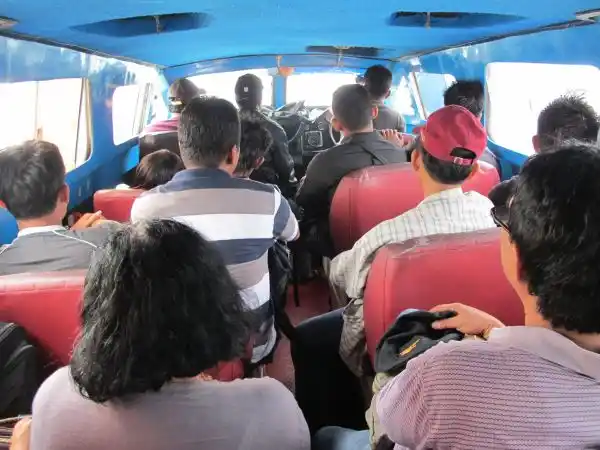
On board the crowded, colourful ferry, we joined other passengers stowing belongings under seats and in the aisle for the ninety-minute crossing to Tunon Taka Port, Nunukan. It's the cheap, popular route for cargo and locals moving between Malaysia and Indonesia, so both terminal and ferry were busy and noisy. We spent the crossing talking with fellow passengers, who gave us a useful rundown on Nunukan.
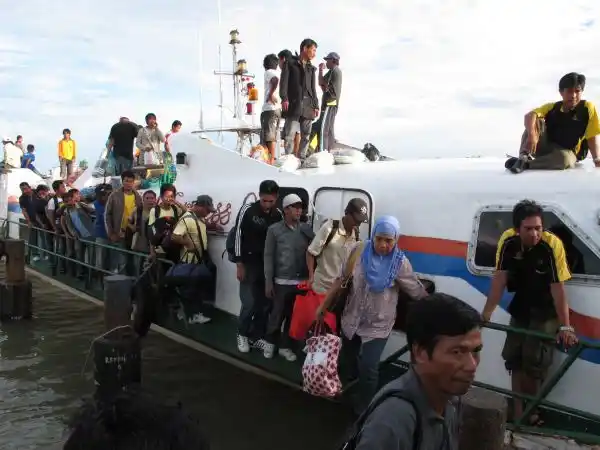
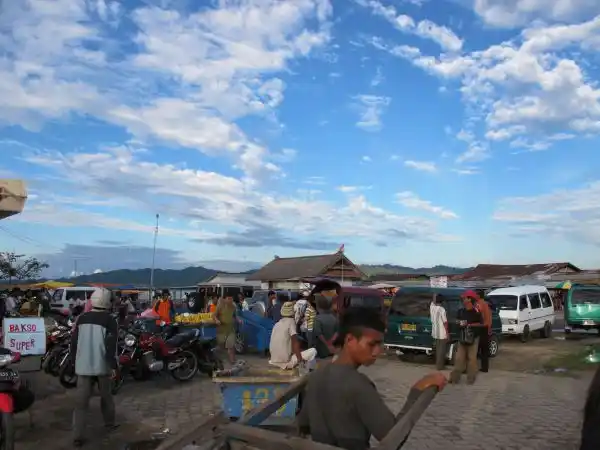
We arrived in Indonesia at 5:30pm, checked into the Neo Fortuna Hotel, and despite our exhaustion, went out to see the town.
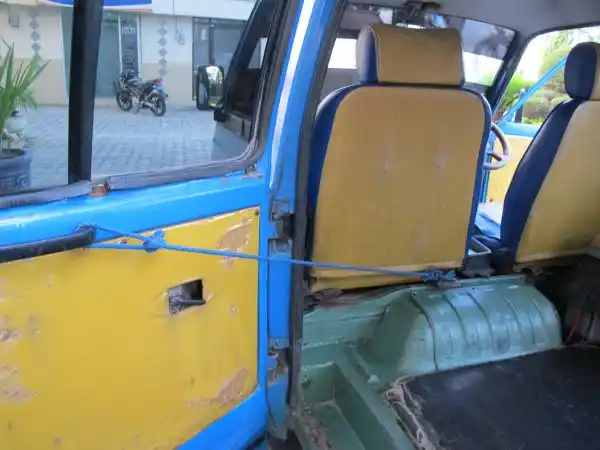
Nunukan isn't a wealthy town, but it makes up for it in ingenuity and hospitality. We admired the amusement park in the square outside the hotel, with its pedal-powered merry-go-round and other homemade attractions, full of children in the ball pit, fishing for prizes, and squealing on the rides. Old-style photo booths, buses with doors held shut by wire, and painted tin toys gave the whole square a feeling of stepping back in time.
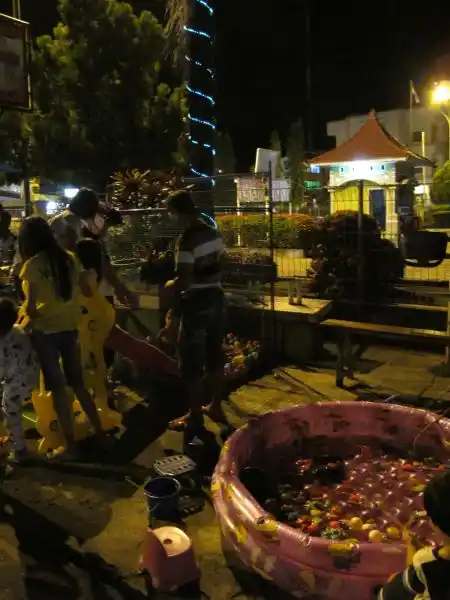
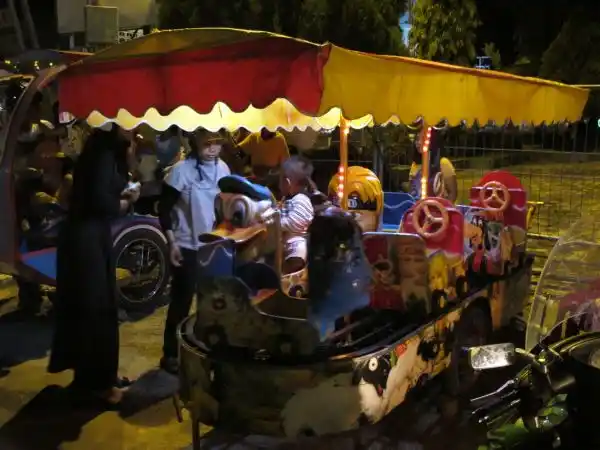
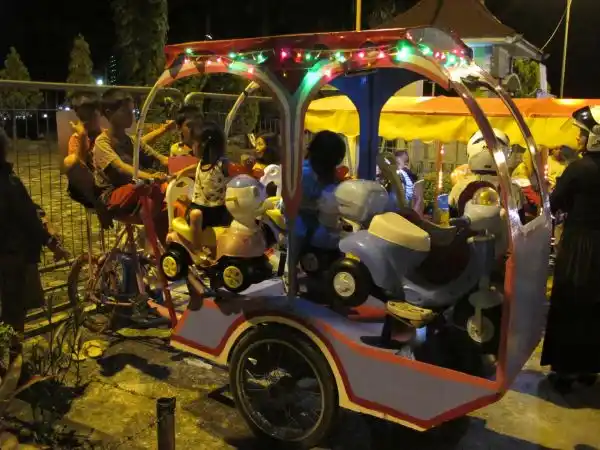
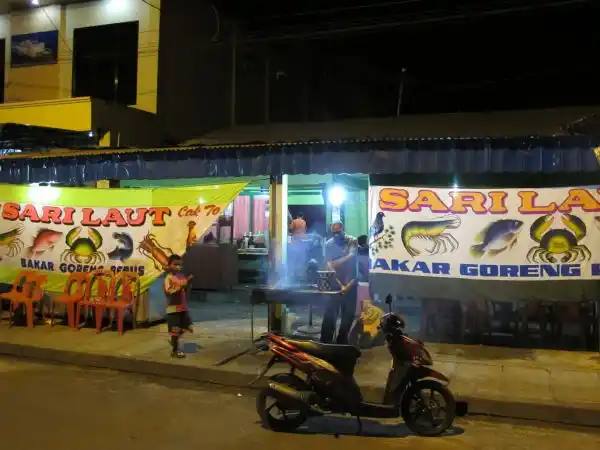
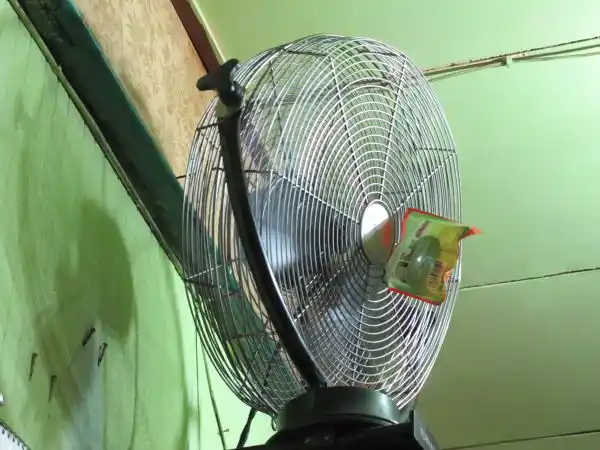
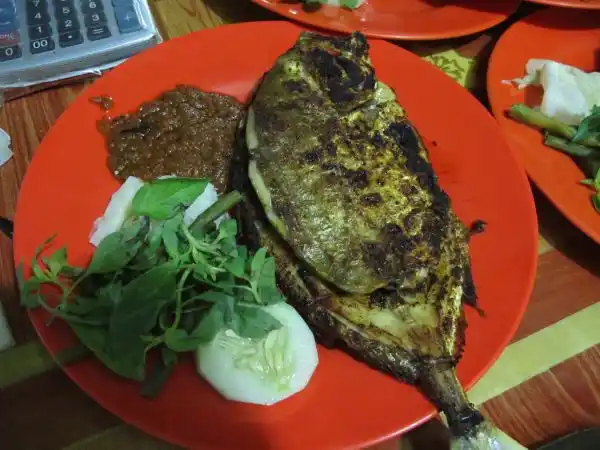
We ate at Warung Sari Laut Cak To, a popular local seafood spot, admiring the fan with its built-in air freshener while watching the night life outside. The ikan bakar, grilled fish fresh from the sea over a charcoal grill, was worth the wait. Later, we went back to the hotel and slept well. Despite the disruption to our plans, the chance to spend time with local people more than made up for the day's frustrations.
The next morning, we headed back to the ferry terminal. It was a public holiday, so many locals in their Sunday best joined us for the three-hour crossing to Tarakan. The ferry was even more crowded than the day before, and the seats even narrower still, but the three-hour crossing gave us a clear run of open-water views the whole way.
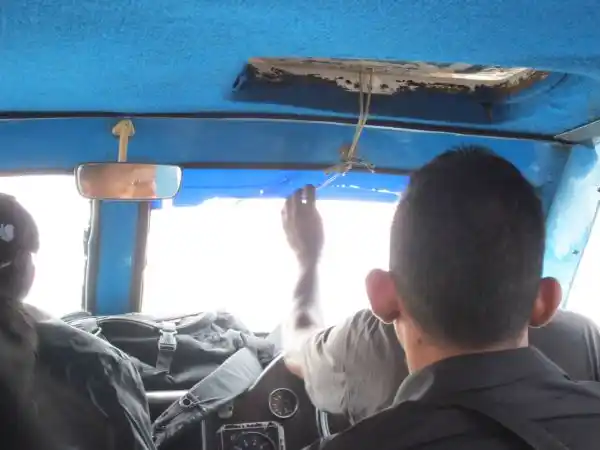
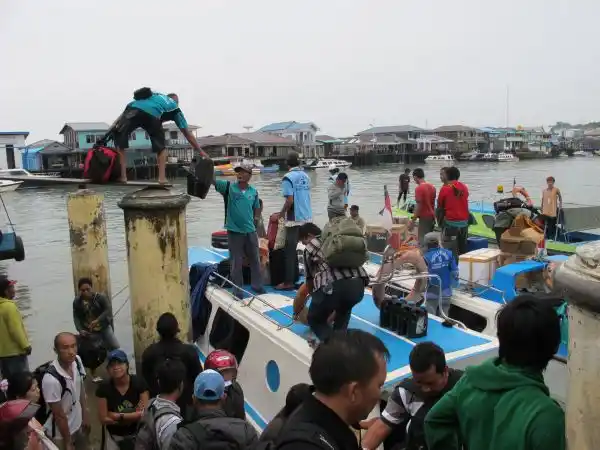
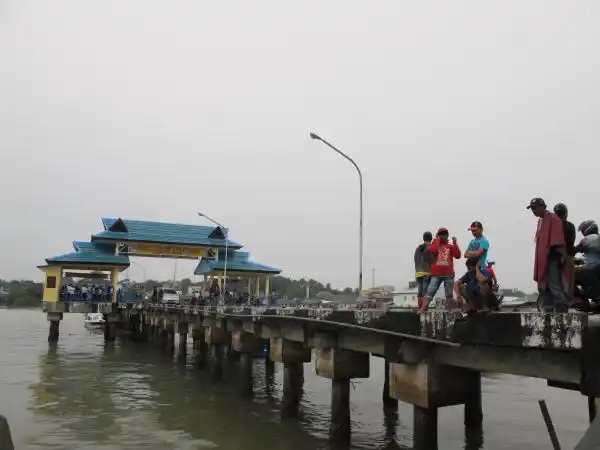
At Tarakan, we chartered a private boat for the three-and-a-half-hour trip to Maratua Paradise Resort, Maratua Island, arriving at 2:30pm, almost 24 hours later than planned.
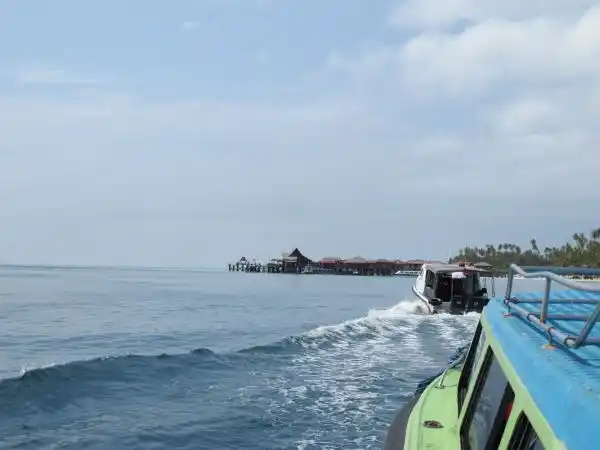
We were warmly welcomed at Maratua Paradise Resort, whose owners we've known for years and who also operate MV Celebes Explorer at Sipadan. The attention they showed us and the other guests was a reminder that in the diving world, there are no strangers, only friends you haven't met yet.
Our accommodation was simple, clean and comfortable, with the sound of the sea a constant presence. The water villas and restaurant, perched on stilts above clear water, gave the resort a particular atmosphere, and the food was excellent, with plenty of freshly caught seafood.
Maratua Paradise Resort is built around the diving, but our hosts also arranged a local dance troupe for one evening, and a scooter ride around the island on our one dry day turned into a highlight of its own.
The diving at Maratua, Kakaban, and Sangalaki lived up to the effort of getting there: giant manta rays, huge schools of barracuda and green turtles, and the elusive mandarin fish and two-eyed lionfish among the highlights.
We'd visit Maratua Island again without hesitation. There's far more to see, and we had a great time. Next time, though, we probably won't be trying the “alternative routes” again, though we wouldn't trade our unplanned time in Nunukan for anything. We came away with more adventure than we bargained for.
If you're planning to visit Maratua Island, we'd recommend:
- Keep your travel insurance current. This corner of Indonesia still runs on infrequent connections, and delays compound quickly across multiple legs.
- Build in more buffer time between connections than feels necessary, especially on routes where flights run a few times a week rather than daily.
- Expect the unexpected, and enjoy it when it happens. Some of our best days in this region started as the wrong ones.
The exact route we took no longer exists, but the principle hasn't changed. Ask us about current connection times before you book Maratua, and we'll flag where the buffer needs to be biggest.