How to Chase a Manta
Spoiler: don't. Six things that actually work for getting close to a manta ray, from an unrepeatable three-minute chase that taught the opposite lesson.
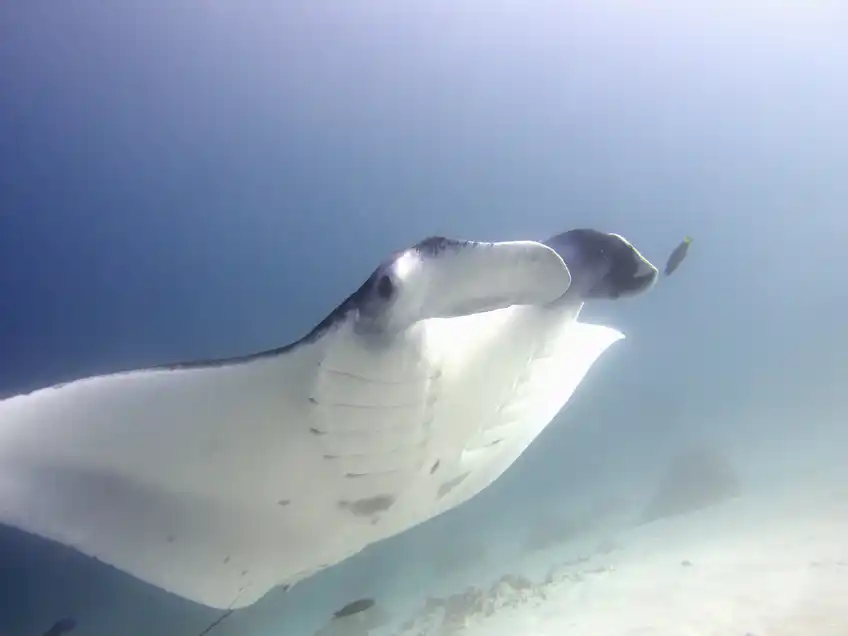
The first time I encountered a manta face to face many years ago, I couldn't stop grinning all day. There is something magical about these big creatures, the calm way they move underwater, fully aware of their surroundings. They could glide over you just inches above your head and still manage to avoid touching you.
Here's a clip of me chasing a manta for over three minutes, and I'm going to show you how.
OK, I lied. Yes, I kept up with the manta for over three minutes, but it was at the expense of great effort and I won't recommend it. The manta was just gently gliding along while I was finning furiously. This article isn't about how to chase mantas at all; instead, here are six tips on how to see and get close to them.
1. Mantas are often spotted in shallower waters
While diving, look up often. I've heard numerous stories where the boatman, waiting for divers below, spotted mantas near the surface. When the boatman asks the divers about it afterward, none of them saw it, because they were so focused on the reef edge below that they missed the mantas entirely. Lost opportunities, every time.
2. Chasing mantas is a bad idea
You won't keep up with a manta, and if you're taking photos, you'll only end up with shots of its rear end. Chasing them is also the quickest way to send them off into the blue, ruining the encounter for every other diver in the group.
This is what happens when you try to chase one. The most common side effect is signalling “low on air” to the divemaster shortly after.
For the diver's own dignity, the person in this video, although known to our group, will remain nameless. Yes, the side effect happened. In their defence, they were only recently certified, so no one in the group blames or holds a grudge for the enthusiasm.
3. Move slowly, and if possible, keep still
Mantas are curious too. If you move slowly or hold still, there's a decent chance they'll come closer to have a look, likely wondering why our heads keep leaking air underwater.
If they're being cleaned by reef fish at a cleaning station, moving slowly to avoid startling them gives you a good chance to watch from close range.
Sometimes a manta will glide past at a distance, circle round, and pass again a little closer. If you're lucky, it keeps circling nearer until it's directly overhead before disappearing back into the blue.
4. Bring a reef hook and a pointer with a loop on one end
In my experience, every manta sighting has come with mild to strong current, which makes staying still difficult. A reef hook lets you secure yourself in place; on a sandy bottom, push the pointer into the sand and hook onto that instead.
5. Make sure everyone in your group is briefed
Knowing what to do when a manta shows up makes the encounter better for everyone. Your divemaster will usually brief the group beforehand, but if they forget, ask.
6. Enjoy the moment
This one's for the photographers and videographers among us. It's easy to get so focused on the perfect shot that you forget to put the camera down and just watch.
Even after all my encounters with mantas, I'm still awed every time I see one on a dive.
Where to See Mantas
Mantas tend to show up at particular times of year. There's no guarantee you'll see one on any given dive, but a longer trip with repeat visits to the same site, timed to the season, gives you the best odds.
Here are the best times to see mantas at a couple of destinations:
Central Raja Ampat, Indonesia: spotted year-round, but the best window is October to June.
Sangalaki Island, Indonesia: spotted year-round, more frequently between November and January.