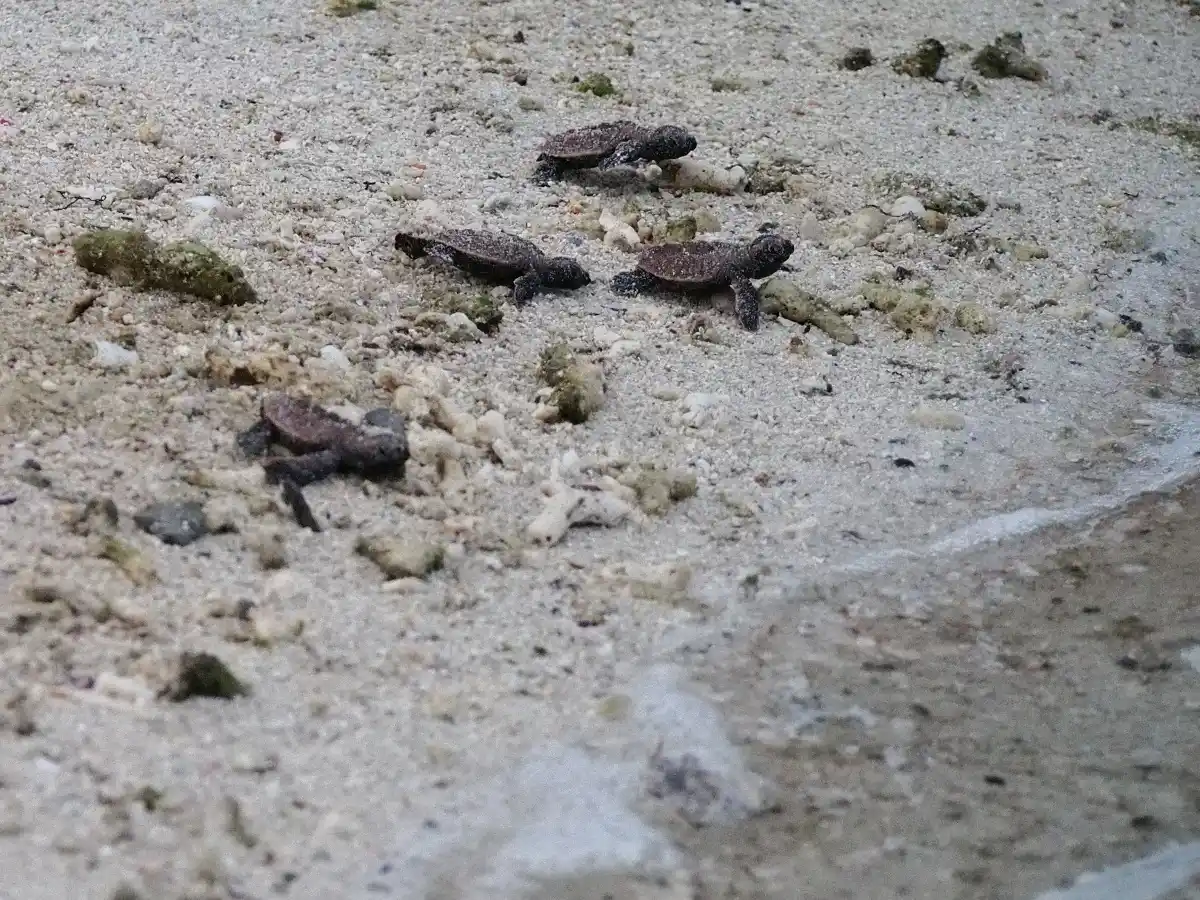
Green, Hawksbill and Loggerhead Turtles, and How to Tell Them Apart
Three sea turtle species that get mixed up constantly underwater. Here's what to look for in the shell, head and flippers to tell them apart on sight.
To the untrained eye or novice diver, these three species are easy to mix up. They're all closely related, with a beak and a shell like any other sea turtle. Once you know the telltale signs, though, telling them apart becomes straightforward.
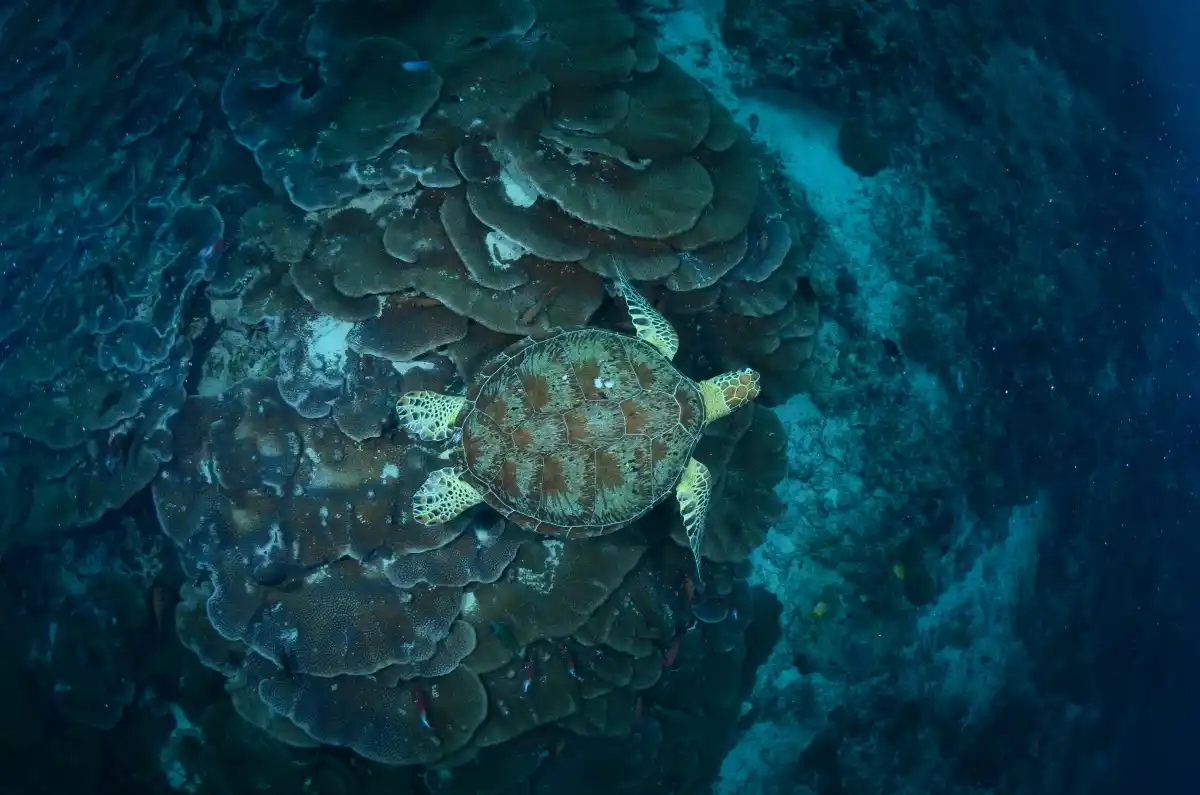
Biologists use a long list of characteristics to differentiate between these turtles, but here are a few obvious ones you can use to identify them quickly and accurately.
Shell
When you encounter a sea turtle, the shell and its pattern is usually the first thing you'll notice, often from some distance.
Carapace, Plastron, Scutes: What Are They?
The shell on a turtle's back is called the carapace, and the belly side is the plastron. Both are made up of plates called scutes. The thin plates around the shell's edge are marginal scutes, the ones down the centre are vertebral scutes, and the ones along each side are costal scutes.
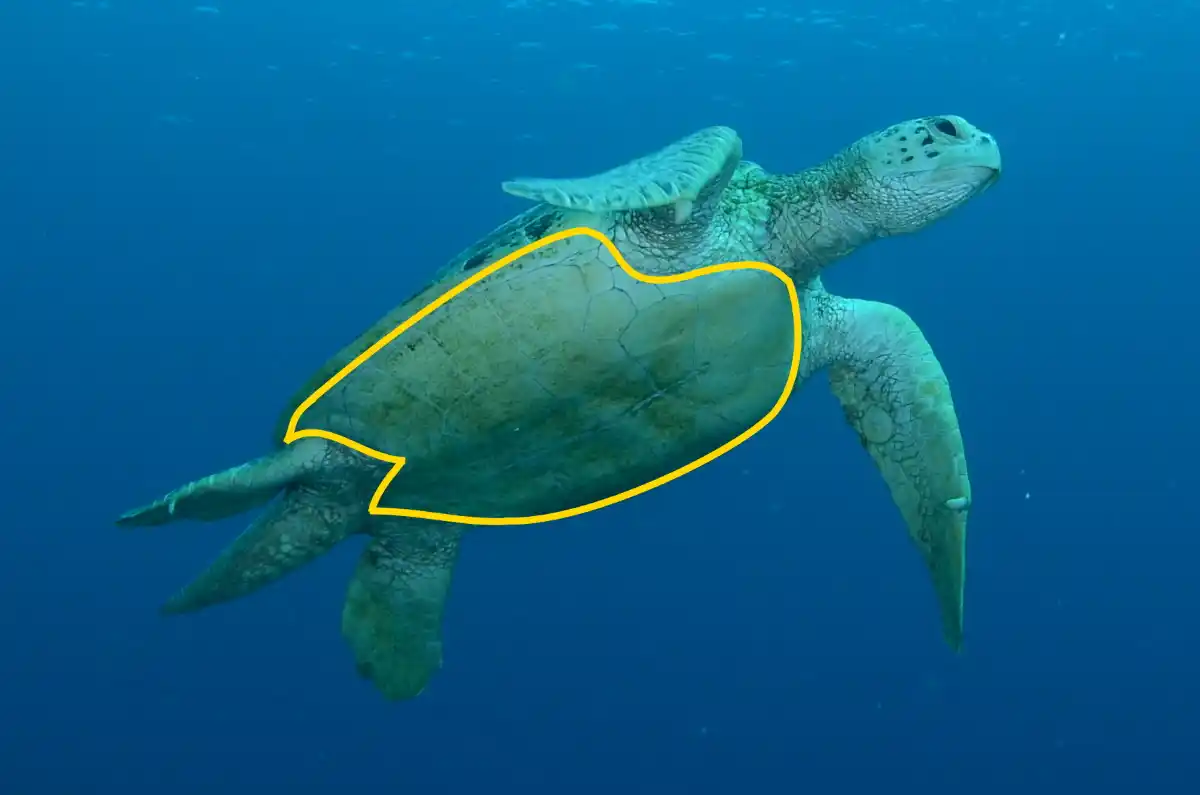
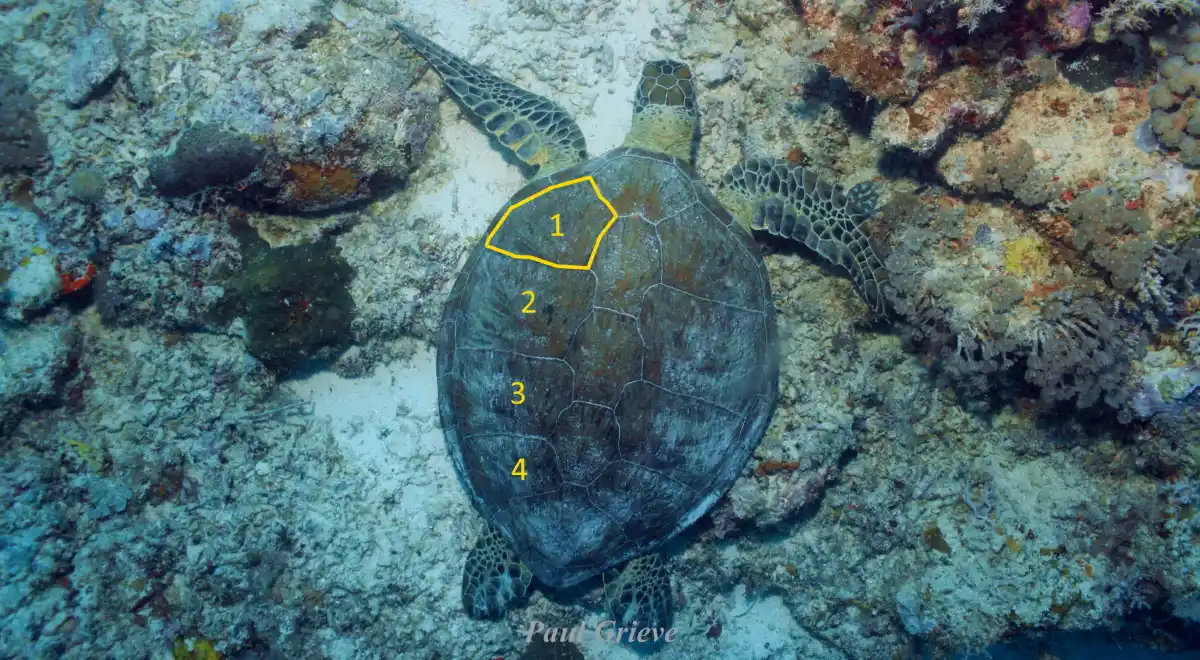
Hawksbill and green turtles both have four costal scutes, while loggerheads have five. The scutes on green and loggerhead turtles are smoother, while a hawksbill's overlap each other.
Head and Neck
If you get close enough, the head and neck give you another way to confirm which species you're looking at.
The hawksbill, true to its name, has a pointed beak much like a hawk's. The green turtle and loggerhead both have rounder, less protruding beaks. The loggerhead's head is also noticeably bigger and rounder relative to its body.
Green Turtle: Chelonia mydas
Among the largest sea turtles in the world, green turtles can weigh up to 200kg. Tracking data has recorded them travelling 2,000km between nesting sites and feeding grounds. They're mostly found grazing near grassy seafloors and are thought to live past 100 years. Females typically return to the same beach used by their own mothers to nest, laying up to 120 eggs at a time, of which only a small fraction survive. Their sex is determined by the incubation temperature of the sand around the eggs.
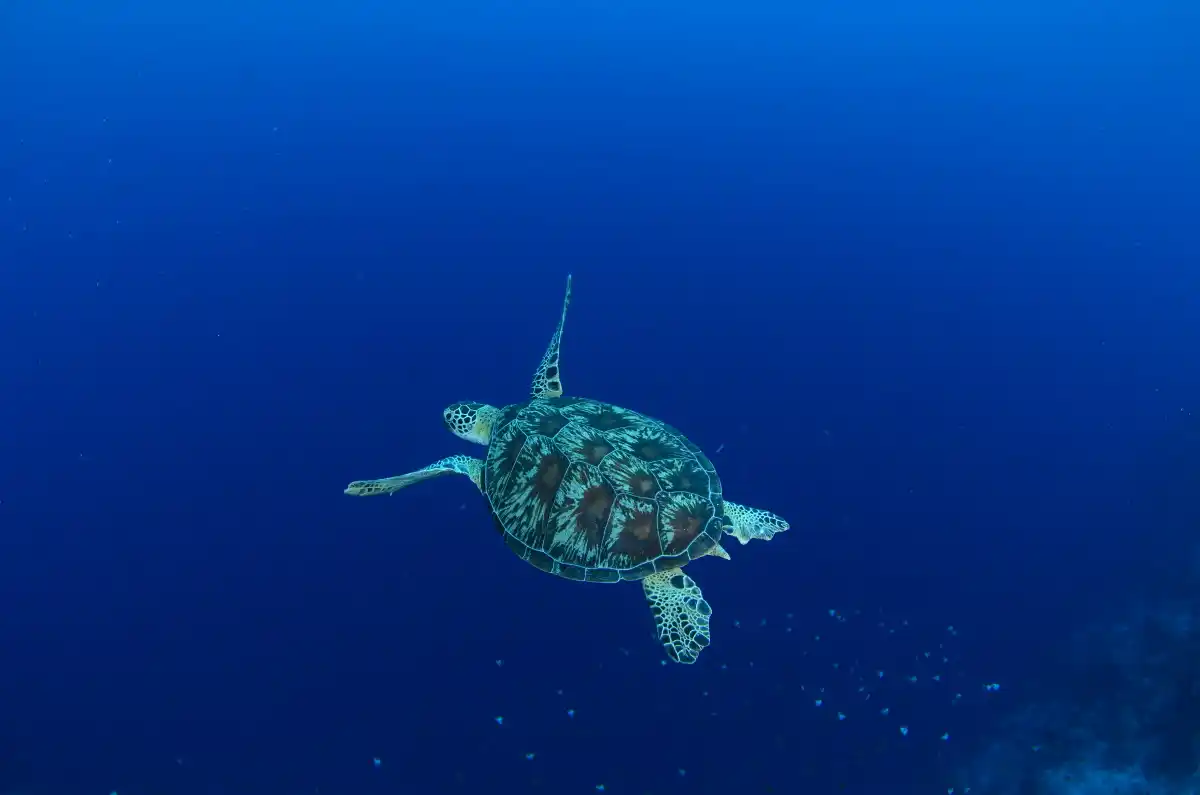
Why green turtles matter
Green turtles feed on seagrass and algae, keeping seagrass beds healthy and productive, in much the same way pruning keeps a garden growing well. As the turtle digests the seagrass, it recycles nutrients back into the ecosystem for countless other species.
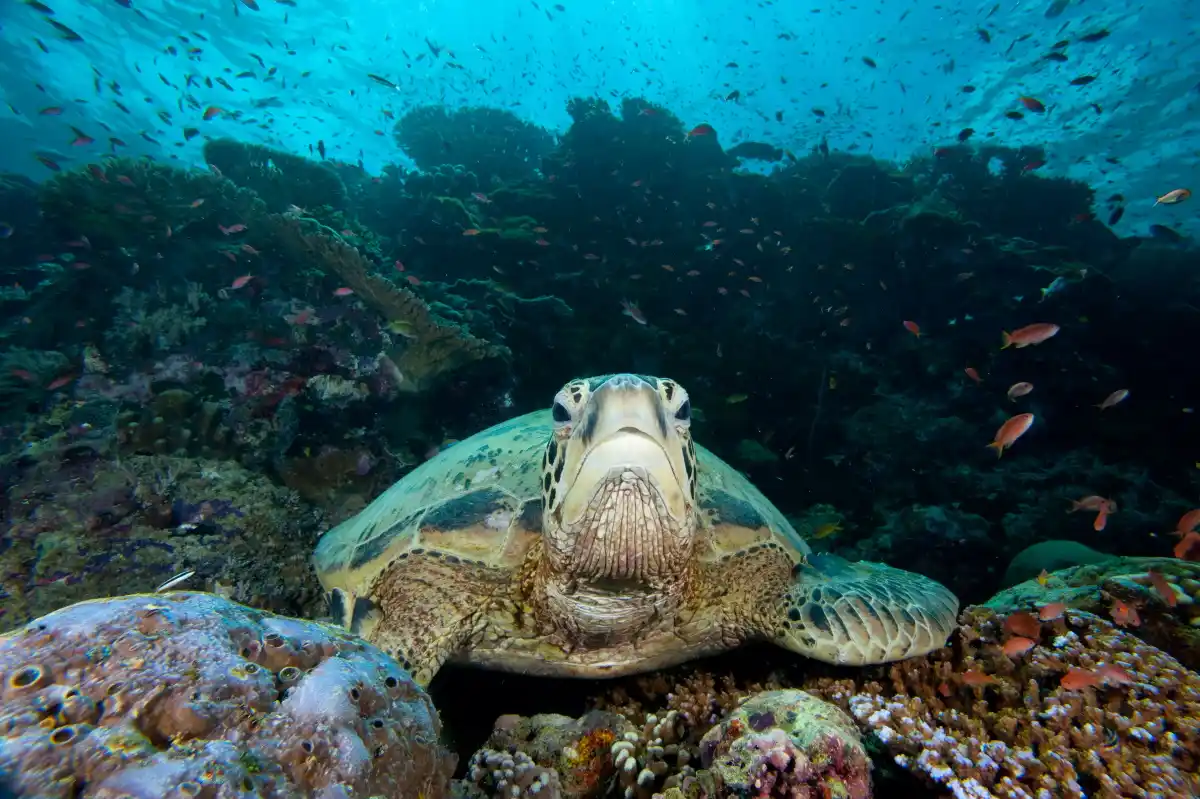
Healthy seagrass beds support nursery habitats where many species of fish and invertebrates spend part of their life cycle, and those species in turn feed hundreds of millions of people.
Why green turtles need protecting
The World Wide Fund for Nature (WWF) lists green turtles as endangered. They're hunted for eggs and meat, and their population is under further pressure from the destruction of nesting grounds, fishing nets, and boat propeller strikes.
Visual clues at a glance
- Round, steep, smooth carapace.
- Carapace colour ranges from brown to olive.
- Four pairs of costal scutes.
- One claw on each flipper.
- Grows up to 120cm long.
Hawksbill Turtle: Eretmochelys imbricata
Smaller than most sea turtles, hawksbills weigh around 68kg. They graze on sponges and other reef organisms and tend to stay close to reefs for shelter from predators like sharks. They were once thought to be less migratory than other turtles, but satellite tracking has since shown they travel long distances too. They live 30 to 50 years, and their carapace starts heart-shaped in juveniles before elongating with age. Their beak tapers to a sharp point, which is where the name comes from.
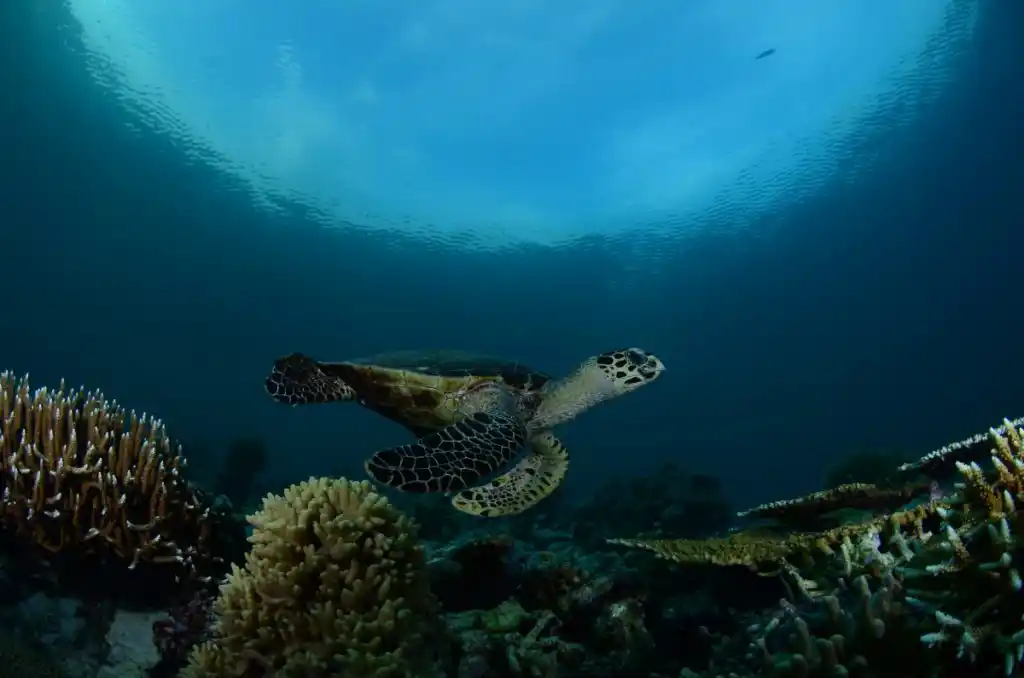
Females lay 60 to 200 eggs at a time, roughly every two to three years, generally choosing to nest near coral reefs.
Why hawksbill turtles matter
They keep coral reefs healthy by grazing sponges off the surface, clearing space for reef fish to access their own food sources. WWF considers hawksbills a priority species because of their ecological, cultural and economic value.
Why hawksbill turtles need protecting
The hawksbill population has declined by more than 80 per cent over the last century, putting them at critical risk of extinction, driven by pollution, climate change, and hunting for their shells.
Visual clues at a glance
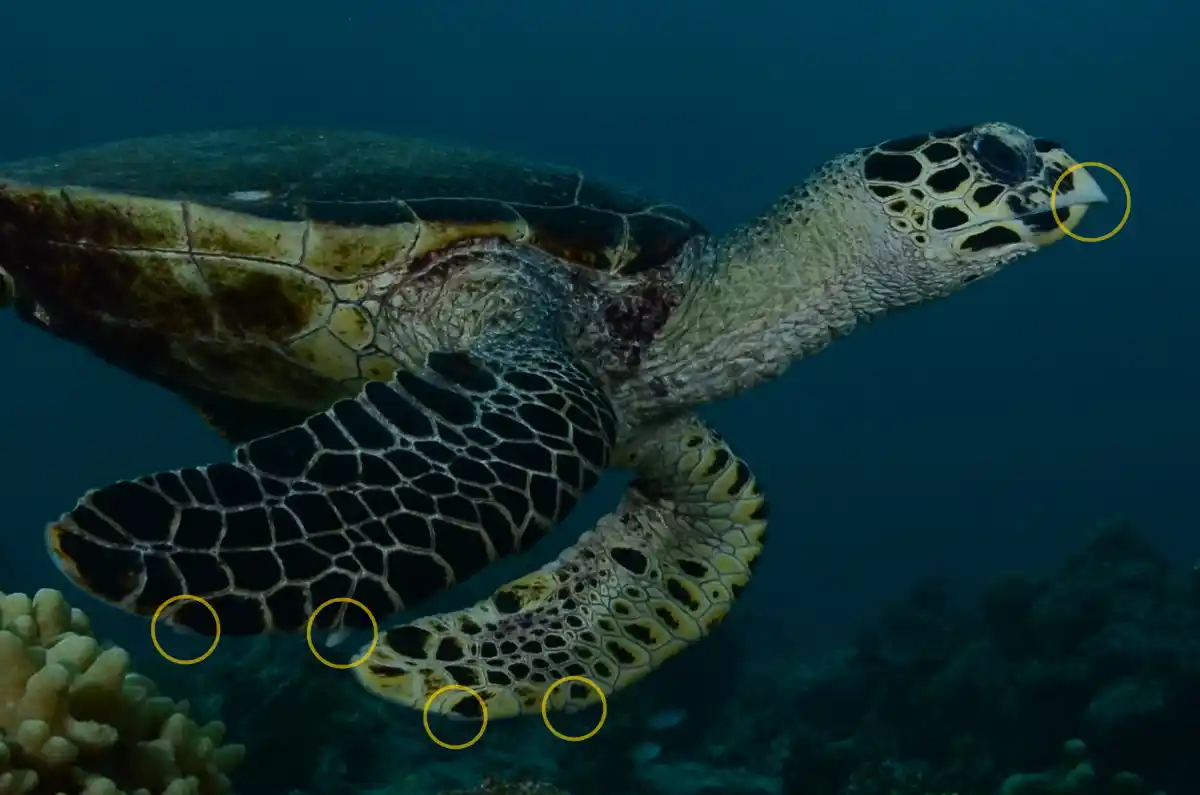
- Pointed beak.
- Elliptical, brightly coloured carapace.
- Four thick costal scutes overlapping in shades of orange, brown and yellow.
- Two claws on each flipper.
- Grows up to 90cm long.
Loggerhead Turtle: Caretta caretta
Loggerheads are large, at up to 230kg, dive to depths of around 230m to regulate their body temperature, and can live over 100 years. Their large head and strong jaws are the giveaway, and while generally placid, they should be given space and respect. They feed on the highly venomous Portuguese man o' war, along with molluscs, crabs, sponges and urchins. Females nest roughly every two years, laying 40 to 190 eggs per clutch.
Why loggerhead turtles matter
Loggerheads excavate sediment from the seafloor while hunting, which helps maintain the balance of the seabed, and their shells host at least 100 other small species as habitat.
Why loggerhead turtles need protecting
WWF considers loggerheads highly vulnerable, with nesting beaches under threat from tourism development, and populations declining due to hunting for meat and eggs, pollution, climate change, and bycatch.
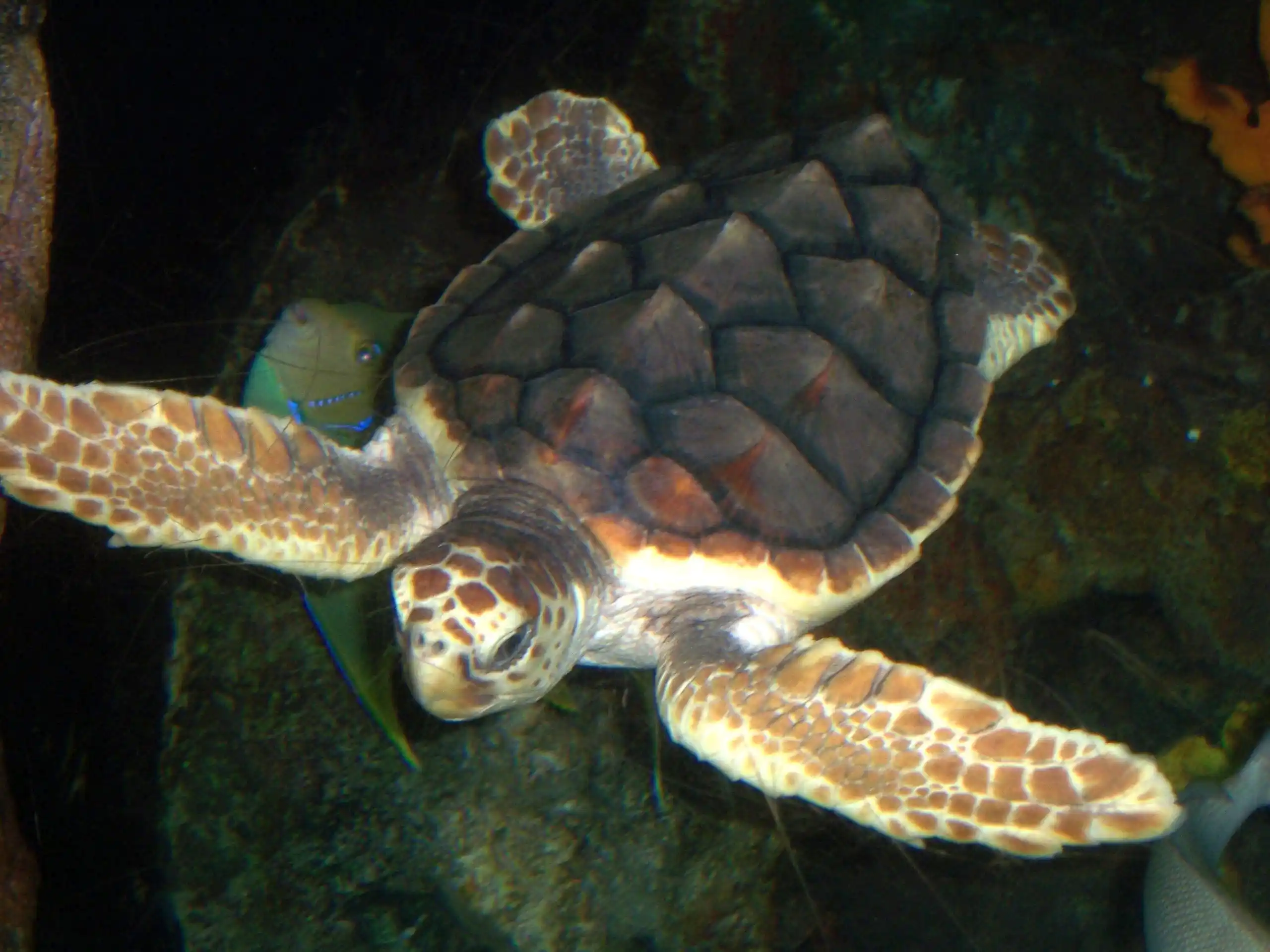
Visual clues at a glance
- Big head, large neck.
- Heart-shaped, reddish-brown carapace with five pairs of costal scutes.
- Two claws on each flipper.
- Grows up to 110cm long.
Where to Dive and See These Turtles
WWF lists the green turtle as endangered, the hawksbill as critically endangered, and the loggerhead as vulnerable. A number of organisations are involved in conservation efforts across the region. Here are some of the best places to see them:
Sipadan Island: permit fees are collected by Sabah Parks, and part of the proceeds go toward the Sipadan Island turtle hatchery.
Lankayan Island: entry fees to the Sugud Islands Marine Conservation Area go toward the Reef Guardian Sea Turtle Conservation programme.
Maratua and Sangalaki Island, both in the Derawan Archipelago: Maratua is known as the Turtle Capital of Indonesia, while Sangalaki holds the largest known green turtle nesting population in the Celebes Sea. WWF Indonesia runs turtle conservation efforts in the area.